The India Nobody Saw Coming in Defense
Imagine a country that, for decades, spent billions of dollars every year buying weapons from Russia, France, the United States, and Israel — a country that repeatedly topped global rankings as the world's single largest arms importer. Now imagine that very same country quietly building an arsenal of indigenous missiles, aircraft, warships, and artillery systems, and then selling them to 80 countries across the world.
That country is India. And this is not a future scenario — it is happening right now, in real time.
India's defense export story is one of the most remarkable industrial transformations of the 21st century. It is a story that began with near-zero exports, lived through decades of neglect and over-dependence on foreign suppliers, and then — with a combination of bold policy decisions, private sector awakening, and technological ambition — pivoted into an ascending global defense manufacturer and exporter.
₹686 Cr
Defense Exports in 2013-14 (starting point
₹38,424 Cr
Defense Exports in 2025-26 (latest record)
56×
Growth in 12 years
80+
Countries that buy Indian defense goods
₹50,000 Cr
Export target by 2029
1,762
Export authorizations issued in FY 2024-25
In this article, Clikit takes you through the complete story — with year-wise data spanning nearly 30 years, milestone events, policy analysis, sector breakdowns, export destinations, product categories, ongoing challenges, and the road ahead. Whether you are a student, a defense analyst, a policy researcher, or simply a curious reader, this is the most comprehensive guide to India's defense export journey available today.
Why India's Defense Export Story Matters Globally
The growth of India's defense export sector is not just an economic story. It carries deep strategic, geopolitical, and technological implications for India and for the world at large.
Strategically, a country that can sell its own weapons is a country that is no longer strategically dependent on suppliers. For India, which fought wars in 1962, 1965, 1971, and 1999, the ability to manufacture and export advanced defense systems represents a fundamental shift in national power. It means India can arm itself on its own terms — and earn revenue doing so.
Economically, the defense sector creates high-value, high-skill employment. Every fighter aircraft, missile system, or naval vessel contains thousands of components made by engineers, technicians, and factory workers. India's growing defense industrial base is generating jobs and building long-term industrial capacity that also benefits civilian sectors.
Geopolitically, defense exports are one of the most powerful tools of international influence. When India sells the BrahMos missile to the Philippines, it cements a strategic relationship. When Indian Dornier aircraft fly in the colors of a friendly nation's air force, that is soft power in uniform. The United States understands this deeply — American defense exports have shaped global alliances for 80 years. India is now entering this game.
💡 Key Insight
India's defense export growth is part of a broader strategic vision articulated under the "Aatmanirbhar Bharat" (Self-Reliant India) initiative — a policy philosophy that sees domestic manufacturing capability as essential to national security and economic development simultaneously.
Historical Context: India as the World's Largest Arms Importer
To fully understand how far India has come, we must first understand where it started — and why.
After Independence in 1947, India inherited a very limited industrial base, particularly in defense. The colonial-era British administration had deliberately kept India dependent on British defense production. Post-independence, India's leadership, focused on economic development and social welfare, did not prioritize defense production as a national industrial goal.
For most of the Cold War era, India relied on the Soviet Union as its primary arms supplier. This relationship provided India with large quantities of tanks, aircraft, submarines, and artillery at favorable prices. But it also created a deep structural dependency: India's military became operationally, logistically, and technically dependent on Soviet/Russian weapons systems.
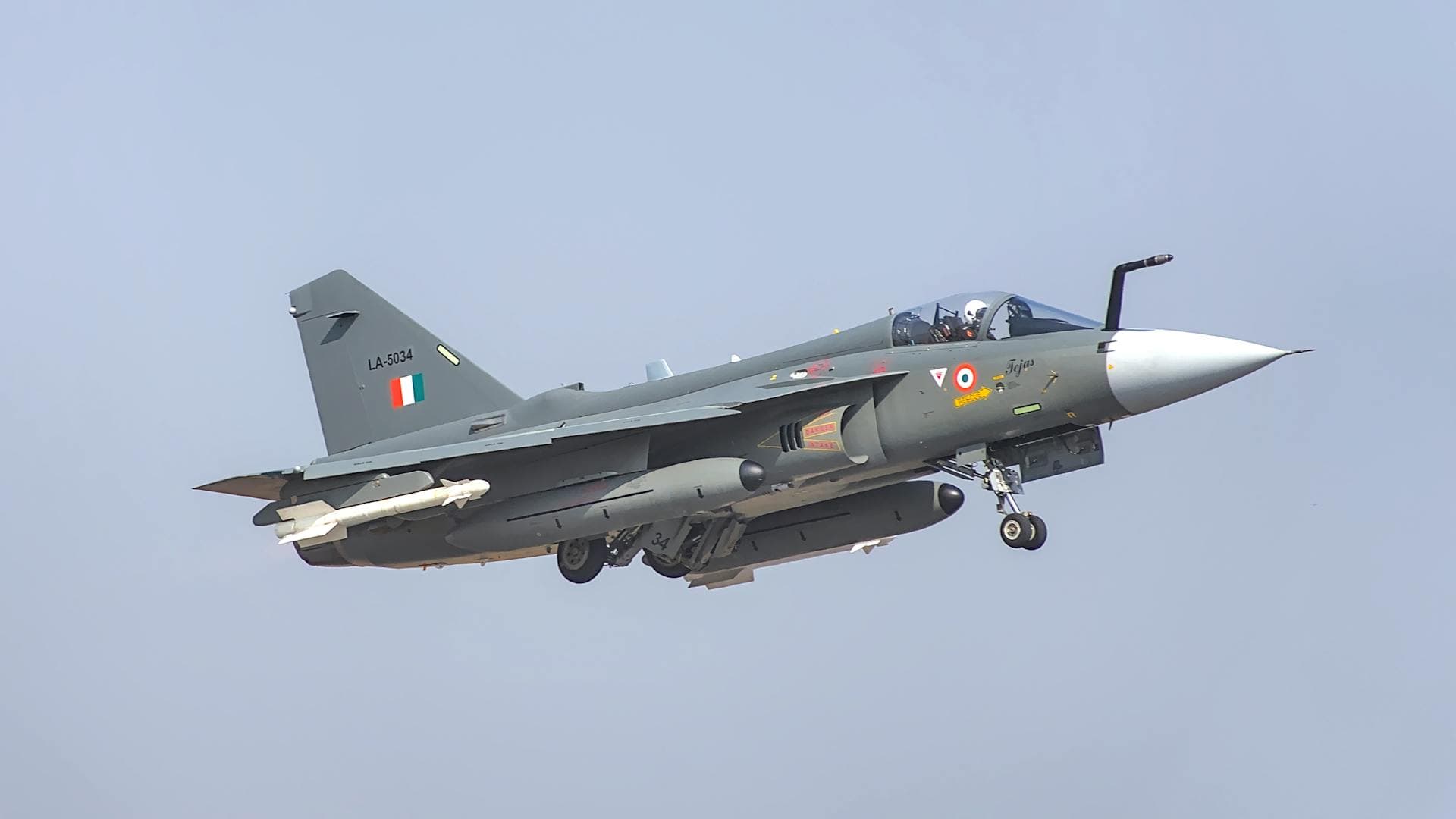
Even as DRDO (Defence Research and Development Organisation, established in 1958) and Defense Public Sector Undertakings like HAL (Hindustan Aeronautics Limited, founded in 1940), BEL, BEML, and Ordnance Factories were created to build indigenous capability, progress was slow. Projects often ran over budget and over schedule. The Tejas Light Combat Aircraft program, for example, began in 1983 and only achieved Initial Operational Clearance in 2013.
India consistently held the top or top-three position as a global arms importer in SIPRI's annual reports for most of the 2000s and 2010s — a status that reflected both the scale of India's military needs and the limitations of its domestic defense industry.— Synthesized from SIPRI Annual Reports on International Arms Transfers
By 2014-15, India's defense exports stood at just ₹1,940 crore — a negligible figure for a country with one of the world's largest militaries. The reasons were structural: a licensing regime that was difficult to navigate, limited private sector participation, technological gaps, lack of export promotion infrastructure, and no clear national export strategy.
All of that was about to change.
Year-Wise Defense Export Data — 30 Years of Numbers
The following data represents the most comprehensive publicly available picture of India's defense export journey. Figures for the years before 2014-15 are estimated or approximate ranges derived from government reports and parliamentary statements; figures from 2014-15 onward are from Ministry of Defence official releases.
1994–2013: The Silent Decades
During this nearly two-decade period, India's defense exports were minimal and largely unreported as a distinct category in government data. Exports consisted primarily of items like spare parts, small arms components, ammunition, and civilian-dual-use military goods. There was no coordinated export promotion strategy, and the dominant focus was on domestic supply to Indian Armed Forces.
Data Note
India did not publish comprehensive, consolidated annual defense export figures as a specific statistic until the mid-2000s. Earlier data is partially reconstructed from parliamentary answers, Ministry of Defence annual reports, and SIPRI documentation. Figures below for pre-2014 periods are approximate and sourced from available government records.
Financial Year | Approx. Exports (₹ Crore) | Approx. USD Equivalent | Key Notes |
|---|---|---|---|
1994–95 | ~100–150 | ~$30–45 million | Mostly spare parts, components, ordnance exports |
1997–98 | ~150–200 | ~$40–55 million | Some HAL MRO exports to friendly nations |
2000–01 | ~200–300 | ~$45–65 million | BEL begins limited electronics exports |
2003–04 | ~250–350 | ~$55–75 million | Ordnance factory ammunition exports rise |
2004–05 | ~350–450 | ~$75–100 million | Beginning of decade: cumulative 2004–2014 total ≈ ₹4,312 crore |
2007–08 | ~400–550 | ~$90–130 million | HAL exports Chetak helicopters; BEL exports to Africa |
2010–11 | ~500–700 | ~$110–155 million | Slow growth continues; licensing still burdensome |
2012–13 | ~600–750 | ~$110–140 million | Private sector nearly absent; DPSUs dominate limited exports |
2013–14 | ~686 | ~$114 million | Official data point. Last year before the policy pivot. BASELINE |
Looking at these two decades, the picture is clear: India was exporting defense goods, but in negligible quantities — and without any coherent national strategy. The 2004–2014 decade produced cumulative defense exports of approximately ₹4,312 crore across ten years. The next decade would produce ₹88,319 crore — a 20x increase driven entirely by policy change and industrial awakening.
2014–2017: The Policy Shift Era
The year 2014 marked a genuine turning point. The newly elected government under Prime Minister Narendra Modi launched the "Make in India" initiative in September 2014, with defense explicitly identified as one of the 25 priority sectors. The policy intent was clear: build a domestic defense industrial base, reduce import dependency, and — crucially — build toward becoming an exporter.
Several structural reforms immediately followed: liberalization of defense FDI norms (initially to 49%, later increased), simplification of industrial licensing, introduction of defense offset clauses requiring foreign vendors to source locally, and the creation of dedicated export promotion mechanisms. Private companies were invited into defense manufacturing for the first time in a meaningful way.
Financial Year | Exports (₹ Crore) | USD Equivalent | Growth % | Milestone |
|---|---|---|---|---|
2014–15 | 1,940.64 | ~$323 million | +182% over 2013-14 | Make in India launch; first big jump LEAP |
2015–16 | 2,059.18 | ~$308 million | +6% | DFP policy reforms; FDI liberalized to 49% |
2016–17 | 1,521.91 | ~$227 million | -26% | Dip due to pipeline delays; policy still maturing |
2017–18 | 4,682.36 | ~$720 million | +208% | Dramatic surge; private sector begins contributing SURGE |
The 2016-17 dip is instructive — policy transitions often create short-term disruptions as old systems give way to new ones. But the 2017-18 surge vindicated the strategy: India's defense export nearly tripled in a single year, driven by new export authorizations, private sector entry, and the first large transactions clearing the pipeline.
2018–2021: Acceleration Phase
Between 2018 and 2021, India's defense exports accelerated significantly. Several factors converged: the DRDO's product portfolio had matured with more export-ready systems; the private sector — companies like Tata Advanced Systems, L&T Defence, Bharat Forge, and Mahindra Defence — had established manufacturing capabilities; and India's geopolitical relationships were generating defense partnerships that converted into purchase agreements.
The government launched iDEX (Innovations for Defence Excellence) in 2018, creating a startup-friendly ecosystem for cutting-edge defense technology. The Defence Industrial Corridors in Uttar Pradesh and Tamil Nadu were announced in the same year, creating dedicated manufacturing zones designed to attract global and domestic defense manufacturers.
Financial Year | Exports (₹ Crore) | USD Equivalent | Growth % | Milestone |
|---|---|---|---|---|
2018–19 | 10,745.77 | ~$1.5 billion | +129% | Crosses ₹10,000 crore for first time FIRST ₹10K |
2019–20 | 9,115.55 | ~$1.21 billion | -15% | Slight dip; COVID-19 disruption begins; DPEPP under preparation |
2020–21 | 8,434.84 | ~$1.15 billion | -7% | COVID impact on global supply chain; DPEPP 2020 released DPEPP |
About DPEPP 2020
The Defence Production and Export Promotion Policy (DPEPP) 2020 set an ambitious target: achieve a defense turnover of ₹1,75,000 crore including ₹35,000 crore in exports. This was a decisive policy commitment — not just a goal, but a roadmap with specific mechanisms for achieving it.
The 2019-20 and 2020-21 dips deserve context. Global defense supply chains were disrupted by the COVID-19 pandemic, affecting delivery timelines and contract signings. Despite this, India maintained over ₹8,000 crore annually — a floor that reflected the new structural level of its export capacity.
2022–2026: Record-Breaking Years
The period from 2022 onwards saw India's defense exports enter a sustained record-breaking phase. The Russia-Ukraine war (from February 2022) created unexpected demand for Indian defense products from countries seeking to diversify their supply chains away from Russian systems. India's non-aligned foreign policy also made it a credible supplier to nations that could not buy from NATO countries or Russia.
Financial Year | Exports (₹ Crore) | USD Equivalent | Growth % | Milestone |
|---|---|---|---|---|
2021–22 | 12,814 | ~$1.7 billion | +52% | Strong recovery from COVID; private sector leads RECOVERY |
2022–23 | 15,920 | ~$1.92 billion | +24% | All-time high at that point; 10x over 2016-17 ATH |
2023–24 | 21,083 | ~$2.63 billion | +32.5% | Crosses ₹21,000 crore first time; 31x over 2013-14 FIRST ₹21K |
2024–25 | 23,622 | ~$2.76 billion | +12% | New record; DPSUs grow 42.85%; 80+ export destinations RECORD |
2025–26 | 38,424 | ~$4.5 billion | +62.66% | Biggest single-year jump in history; DPSUs surge 151% ALL-TIME HIGH |
The FY 2025-26 figure of ₹38,424 crore is extraordinary. A 62.66% jump in a single year, driven by a 151% surge in DPSU exports, represents a step-change rather than incremental growth. It signals that India's defense export capacity has now reached the scale needed to compete meaningfully in the global arms market.
Major Milestones in India's Defense Export Journey
Behind every number in that table is a story. Here are the defining milestones that shaped India's defense export trajectory.
SEPTEMBER 2014
Make in India Launch — The Starting Gun
Prime Minister Modi launched the Make in India initiative, identifying defense as a priority sector. Within months, FDI limits were raised from 26% to 49% under the automatic route. Industrial licensing was simplified. This was the policy foundation for everything that followed.
2016
Defence Procurement Procedure (DPP) 2016 — Preference for Indian Products
DPP 2016 introduced the "Make in India" preference categories for defense procurement — specifically the Buy Indian (IDDM) category that required 40% indigenous content. This created domestic demand that simultaneously enabled export capacity, as Indian companies now had to build full-scale manufacturing capabilities.
APRIL 2018
iDEX Launch — India's Defense Startup Ecosystem
Innovations for Defence Excellence (iDEX) was launched at DefExpo 2018. It created a structured pathway for startups, MSMEs, and individual innovators to develop defense technologies, with grants of up to ₹1.5 crore. This infused fresh technological energy into an ecosystem previously dominated by large, slow-moving public sector units.
2018
Defence Industrial Corridors Announced — UP and Tamil Nadu
Two dedicated Defense Industrial Corridors were announced — one in Uttar Pradesh (covering Lucknow, Kanpur, Agra, Aligarh, Jhansi, Chitrakoot) and one in Tamil Nadu (covering Chennai, Coimbatore, Hosur, Salem, Tiruchirappalli). These corridors aimed to attract ₹20,000 crore in investments and create 200,000+ jobs in defense manufacturing.
2018–19
First Time Crossing ₹10,000 Crore
India's defense exports hit ₹10,745 crore — crossing the ₹10,000 crore threshold for the first time in history. This confirmed that the post-2014 policy shift was producing real industrial results, not just aspirational targets.
SEPTEMBER 2020
DPEPP 2020 — India's First Dedicated Defense Export Policy
The Defence Production and Export Promotion Policy (DPEPP) 2020 was India's first standalone, comprehensive defense export promotion strategy. It set the ₹35,000 crore export target (later revised upward to ₹50,000 crore by 2029), established export promotion councils, simplified export authorization procedures, and created an end-to-end digital export authorization platform.
JANUARY 2022
BrahMos Sale to Philippines — India's Largest Defense Export Deal
India signed a ₹2,971 crore ($375 million) deal with the Philippines to supply BrahMos supersonic cruise missile systems — making it India's single largest defense export contract at the time. This was a landmark deal that demonstrated India's ability to export advanced, complex weapons systems — not just components and spare parts.
2022–23
Crossing ₹15,000 Crore — 10x Over 2016-17
Defense exports reached ₹15,920 crore, confirming a more than 10-fold increase from the ₹1,521 crore level of 2016-17 in just six years. The government celebrated this as a clear demonstration of Aatmanirbhar Bharat in action.
2023–24
First Time Crossing ₹21,000 Crore — 31x Growth
India crossed the ₹21,000 crore mark for the first time, with exports reaching ₹21,083 crore. Defence Minister Rajnath Singh called it a "spectacular growth" and noted that the cumulative exports during 2014-15 to 2023-24 had reached ₹88,319 crore — compared to just ₹4,312 crore in the preceding decade (2004-14).
2025–26
Record ₹38,424 Crore — 62.66% Single-Year Jump
India's defense exports touched ₹38,424 crore — an all-time record. DPSUs grew by 151% in a single year, accounting for 54.84% of total exports (₹21,076 crore), while the private sector contributed 45.16% (₹17,348 crore). This marks the first year DPSUs have outcontributed the private sector in percentage terms since the recent growth phase began.
What Does India Actually Export? Products and Technologies
India's defense export portfolio has expanded dramatically over the past decade — from a narrow range of low-technology items to a growing list of sophisticated, system-level military hardware. Here is a detailed breakdown of what India currently exports.
High-Value Strategic Systems
BrahMos Supersonic Cruise Missile: India's flagship defense export product, co-developed with Russia's NPO Mashinostroyeniya. The Philippines purchase was the first foreign sale; negotiations are underway with Vietnam, Indonesia, Saudi Arabia, UAE, and other nations. Future versions include the extended-range BrahMos-ER and the air-launched variant.
Akash Air Defence Missile System: India has signed deals to export the Akash surface-to-air missile system, developed by DRDO. Countries in Southeast Asia and the Middle East have shown significant interest. Armenia became a confirmed buyer.
Pinaka Multi-Barrel Rocket Launcher System: Developed by DRDO and manufactured by Tata and Bharat Forge, the Pinaka MBRL has been exported to Armenia and other nations. Its performance in real combat conditions has drawn considerable global attention.
Advanced Towed Artillery Gun System (ATAGS): India has developed one of the world's longest-range towed artillery guns, with export discussions ongoing with multiple countries.
Aircraft and Aerospace Platforms
Dornier Do-228 Aircraft: HAL manufactures the Dornier Do-228 under license and exports it for maritime patrol, transport, and surveillance missions. Customers include Sri Lanka, Namibia, and other countries.
Chetak Helicopters: HAL's Chetak (Alouette III) helicopters have been exported to several nations including Ecuador and others in Asia and Africa.
ALH Dhruv (Advanced Light Helicopter): Exported to Ecuador, Nepal, Maldives, Mauritius. The Dhruv is India's homegrown helicopter success story, though some export challenges arose after incidents in Ecuador.
HAL-built aircraft components and MRO services: HAL exports aircraft components and provides Maintenance, Repair, and Overhaul (MRO) services to several foreign air forces operating Russian-origin aircraft.
Naval Vessels and Maritime Systems
Fast Interceptor Boats and Patrol Vessels: Indian shipyards export offshore patrol vessels, fast attack crafts, and maritime surveillance platforms to nations in the Indian Ocean Region.
Lightweight Torpedoes: DRDO-developed lightweight torpedoes have been part of India's growing naval export portfolio.
Electronics, Communications, and Cyber
BEL (Bharat Electronics Limited): BEL exports electronic warfare systems, radar systems, military communication equipment, and night vision devices to over 65 countries.
Avionics and Electronic Systems: Indian private companies and BEL supply avionics components for global defense programs, including as Tier-1 and Tier-2 suppliers to US and European defense manufacturers.
Personal Protection and Infantry Equipment
Bulletproof Jackets and Helmets: India is one of the world's largest exporters of personal ballistic protection. Indian-made bulletproof jackets are exported to the United States, European countries, and several other markets.
Military Boots and Uniform Components: Indian defense manufacturers export military boots, uniforms, and field equipment — including, notably, boots manufactured in Bihar for the Russian Army.
Ammunition: India's Ordnance Factories and private sector companies export ammunition in significant quantities — this is one of the largest single categories in India's defense export portfolio.
Components and Subsystems for Global Programs
Tata Advanced Systems and Tata Boeing Aerospace manufacture composite airframe structures for Boeing C-17 Globemaster and AH-64 Apache helicopter programs.
Mahindra Aerospace produces components for global civilian and military aircraft programs.
Bharat Forge exports high-precision forged defense components to Europe and North America.
- Export Composition InsightA significant and often underappreciated part of India's defense export value comes from components, subsystems, and manufacturing services supplied to global defense primes like Boeing, Airbus Defence, and others. This positions India not just as a standalone weapons supplier, but as an integrated part of global defense supply chains — a more durable and scalable export model.
Key Policies That Drove the Transformation
India's defense export growth did not happen by accident. It was the product of deliberate, sustained, and increasingly sophisticated policy intervention. Here is a detailed look at the most impactful policies.
1. Make in India (2014)
The foundational initiative. By designating defense as a priority sector under Make in India, the government created a platform for coordinated policy action. It sent a clear signal to both domestic industry and foreign partners that India was serious about becoming a defense manufacturing hub. FDI norms, licensing regimes, and procurement preferences all began shifting under this umbrella.
2. Liberalization of FDI in Defense (2014, 2020)
Foreign Direct Investment in defense was progressively liberalized — from 26% (pre-2014) to 49% under the automatic route (2014) to 74% under the automatic route and 100% via government approval (2020). This structural change allowed global defense companies to partner with or invest in Indian manufacturers, bringing in capital, technology, and access to global supply chains.
3. Defence Procurement Procedure (DPP) Revisions and DAP 2020
Each iteration of India's Defense Acquisition Procedure (formerly DPP) strengthened indigenous content requirements and preferences for Indian suppliers. DAP 2020 introduced the concept of an "Indigenously Designed, Developed and Manufactured" (IDDM) category with the highest priority, creating strong domestic demand that in turn enables export capacity.
4. Defence Production and Export Promotion Policy (DPEPP 2020)
This was India's first standalone, comprehensive export promotion strategy for defense. DPEPP 2020 set targets, created institutional mechanisms (including export promotion councils and dedicated export cells in DRDO and DPSUs), simplified export authorization procedures, and created a digital portal for end-to-end export authorization processing.
5. iDEX — Innovations for Defence Excellence (2018)
The iDEX framework has engaged over 400 startups and innovators, providing grants and mentorship for cutting-edge defense technology development. Several iDEX-supported companies have developed products with significant export potential — from drone systems to AI-powered surveillance to advanced materials.
6. Defence Industrial Corridors (2018)
The UP and Tamil Nadu Defense Industrial Corridors are physical manufacturing ecosystems designed to cluster defense suppliers, reduce logistics costs, and attract both domestic and foreign investment. As of 2024, investments of over ₹50,000 crore have been attracted to these corridors, and several global defense firms have established manufacturing facilities within them.
7. Simplified Export Authorization and Digital Portal
One of the most practical reforms was the creation of an end-to-end digital system for defense export authorization. This reduced processing times, increased transparency, and eliminated a significant bureaucratic bottleneck that had previously discouraged exporters. In FY 2024-25, 1,762 export authorizations were issued — a 16.92% increase over the previous year — demonstrating the impact of process reform.
8. Positive Indigenization Lists
The Ministry of Defence has published multiple "Positive Indigenization Lists" that progressively ban imports of items where Indian industry has demonstrated the capability to manufacture. These lists simultaneously protect domestic manufacturers from foreign competition and push them to develop export-ready products by building their manufacturing capacity at scale.
India's defense export strategy is notable for integrating demand-side instruments (domestic procurement preferences, indigenization lists) with supply-side instruments (FDI liberalization, export corridors, iDEX) to create a virtuous cycle — where domestic procurement builds capacity that then enables exports.
Private Sector vs DPSUs: Changing the Balance
One of the most significant structural shifts in India's defense export story is the changing relationship between the private sector and Defence Public Sector Undertakings (DPSUs) — HAL, BEL, BEML, MDL, GRSE, BDL, MIDHANI, and the Ordnance Factory Board (now restructured into seven defence PSUs).
The Old Paradigm: DPSU Dominance
For the first five decades of independent India's defense manufacturing history, DPSUs were virtually the only players. Private companies were excluded from defense manufacturing by policy — no private firm could get a manufacturing license for most defense items. This created a system that was stable but not dynamic: DPSUs had captive demand from the armed forces, limited competition, and little incentive to export.
The Post-2014 Shift: Private Sector Entry
As licensing barriers fell and procurement preferences shifted to favor indigenous manufacturers broadly (not just DPSUs), private companies entered the defense sector rapidly. Companies like Tata Advanced Systems, L&T Defence, Bharat Forge, Adani Defence and Aerospace, Mahindra Defence, and dozens of MSMEs built new manufacturing capabilities. The private sector's share of defense exports grew from near-zero to over 60% by FY 2023-24.
Year-Wise Private vs DPSU Contribution
Financial Year | Total Exports (₹ Crore) | Private Sector (₹ Crore) | DPSUs (₹ Crore) | Private % |
|---|---|---|---|---|
2021–22 | 12,814 | ~7,500 | ~5,314 | ~59% |
2022–23 | 15,920 | ~9,500 | ~6,420 | ~60% |
2023–24 | 21,083 | 15,209 | 5,874 | 72% |
2024–25 | 23,622 | 15,233 | 8,389 | 64.5% |
2025–26 | 38,424 | 17,348 (est.) | 21,076 (est.) | 45.16% |
The FY 2025-26 data marks a notable shift: DPSUs have dramatically increased their export share, growing 151% in a single year, and for the first time in the recent growth era, DPSUs contributed more than the private sector in percentage terms (54.84% vs 45.16%). This reflects large HAL and BEL deals clearing, and signals that the DPSU reform agenda is producing results alongside private sector growth.
Where Does India Export? Key Buyer Countries
India's defense export reach has expanded dramatically — from a handful of politically close neighbors to a genuinely global footprint spanning over 80 countries. While the government does not publicly name all export destinations for strategic reasons, enough information has emerged through official statements, parliamentary answers, and academic research to paint a detailed picture.
Top Buyer Regions
Southeast Asia: Philippines (BrahMos), Vietnam (patrol vessels, small arms), Indonesia, Myanmar. India's "Act East" policy has translated into defense partnerships with ASEAN nations seeking alternatives to Chinese military equipment.
South Asia: Sri Lanka (Dornier aircraft, patrol boats), Nepal (ALH helicopters, light vehicles), Maldives (patrol boats). India's neighborhood-first defense diplomacy creates a natural customer base.
Middle East: UAE, Saudi Arabia, and other Gulf Cooperation Council nations have shown interest in Indian defense products, particularly for border security, maritime surveillance, and personal protection equipment.
Africa: Multiple African nations, including Mauritius, have purchased Indian naval vessels and surveillance equipment. BEL exports electronic systems to various African defense forces.
Central Asia and Eastern Europe: Armenia confirmed purchases of both the Pinaka MRLS and Akash air defense system — the most prominent example of India exporting to a country in an active conflict zone (Nagorno-Karabakh).
USA and Western Europe: India exports defense components and subsystems to American and European defense programs as a Tier-1/Tier-2 supplier. Bulletproof vests, aircraft components, and electronic systems are the primary categories.
Russia: An unusual but well-documented example — Indian manufacturers supply boots and uniforms to the Russian Army, reflecting the deep legacy defense relationship between the two nations. This has continued even post-2022, highlighting India's strategic autonomy.
- Strategic Importance of Export Geography
India's defense export geography maps closely to its foreign policy priorities: neighborhood diplomacy in South Asia, strategic competition with China in Southeast Asia, energy partnerships in the Middle East, and Atlantic supply chain integration in the West. Defense exports are thus a tool of foreign policy, not just a commercial activity.
Challenges India Still Faces in Defense Exports
India's growth story is impressive, but intellectual honesty demands acknowledgment of the significant challenges that remain. Understanding these challenges is important for anyone who wants to assess India's true trajectory — not just its official optimism.
1. India Remains the World's Largest Arms Importer
Despite growing exports, India's defense import bill remains enormous. SIPRI's 2024 report confirmed India acquired 9.8% of all global arms imports in the 2019-2023 period — maintaining its position as the world's largest or second-largest arms importer. The gap between India's import dependence and its export growth remains vast. India is simultaneously expanding exports and maintaining massive imports — the structural import dependency has not yet been resolved.
2. Technology Gaps in High-End Systems
India's most impressive export successes — BrahMos, Pinaka, Akash — are DRDO-developed systems that took decades to mature. For next-generation technologies (advanced fighter aircraft, nuclear submarines, stealth systems, fifth-generation avionics), India still depends on foreign technology. This limits the potential product range for high-value export markets.
3. After-Sales Service and Lifecycle Support
Major defense customers don't just buy weapons; they buy a 30-40 year lifecycle relationship with the supplier. This includes spare parts, maintenance, upgrades, training, and emergency support. India's defense export infrastructure for post-sale lifecycle support is not yet world-class. The Ecuador ALH Dhruv incidents, where maintenance issues grounded helicopters, highlight the reputational risk when after-sales support fails.
4. Long Procurement Cycles and Bureaucratic Delays
While India has made significant progress in streamlining export authorization (the 1,762 authorizations in 2024-25 represent real improvement), the broader defense procurement and export ecosystem still involves significant bureaucratic friction. Large defense export deals often take years from initial discussion to contract signing, which limits India's ability to respond nimbly to urgent buyer needs.
5. Competition from Established Defense Exporters
India competes in the global arms market against the United States (by far the world's largest arms exporter), Russia, France, China, the United Kingdom, Germany, and Israel. Each of these countries has decades of export infrastructure, established customer relationships, financing mechanisms, and in some cases geopolitical leverage that India is still building.
6. Financing and Credit Lines for Buyers
Many developing country buyers of Indian defense equipment need concessional financing to complete purchases. India's Lines of Credit (LoC) mechanism through EXIM Bank has been used in some cases, but it is not yet as well-developed or as flexibly deployed as the financing mechanisms offered by the US, France, or China.
India's Defense Export Target 2029 and Beyond
India has set a bold official target: ₹50,000 crore (approximately USD 6 billion) in defense exports by 2029. Given the FY 2025-26 achievement of ₹38,424 crore, this target now looks not just achievable but potentially conservative.
The Path to ₹50,000 Crore
From ₹38,424 crore in 2025-26, reaching ₹50,000 crore by 2029 requires approximately 30% total growth over three to four years — a CAGR of about 7-9%. Given India's recent trajectory (62% growth in a single year in 2025-26, 32% growth in 2023-24), this target appears well within reach if current conditions hold.
Factors That Could Accelerate Growth
BrahMos deals closing: India is in advanced discussions with multiple nations for BrahMos purchases. Each deal is worth $300-500 million. If three to five deals close in the 2026-2029 period, they alone could add ₹8,000-15,000 crore to export totals.
HAL Tejas export: The Tejas Light Combat Aircraft has attracted serious interest from Malaysia, Argentina, Egypt, and others. A single national fleet order for 50 aircraft could be worth several billion dollars.
Defense corridor output scaling: As the UP and Tamil Nadu corridors mature, industrial capacity and export output from these zones will increase significantly.
iDEX-backed startups reaching export maturity: Several technology startups supported by iDEX are developing drone systems, AI-powered defense technologies, and advanced materials that could become significant export items in the late 2020s.
Geopolitical tailwinds: The ongoing diversification of global defense supply chains away from Russian and, in some markets, Chinese systems continues to create opportunity for India.
The Long-Term Vision: Top 10 Defense Exporter
India's stated long-term ambition is to become one of the world's top 10 defense exporters. As of 2023, SIPRI ranked India as an emerging exporter but not yet in the top 10 globally. The current trajectory, if sustained, could realistically place India among the top 10 by 2030-2035. For context, France — a top-5 global defense exporter — exported approximately $27 billion in defense goods in the 2019-2023 period. India is still well below that level, but the gap is narrowing.
Key Lessons and Actionable Takeaways
India's defense export transformation offers lessons that go far beyond the defense sector — for students, policy researchers, business leaders, and citizens who want to understand how industrial change happens at the national level.
Lesson 1: Policy Coherence Creates Industrial Transformation
India's defense export growth after 2014 was not the product of a single magic policy — it was the result of coherent, multi-year, multi-instrument policy action: FDI reform + procurement preferences + export facilitation + industrial zone creation + startup support, all aligned toward the same goal. When government sends a consistent signal over time, industry responds.
Lesson 2: Import Dependency Can Be Reversed — But It Takes Decades
India's dependence on foreign arms took decades to build and will take decades to fully reverse. The current export growth is impressive, but India's import bill remains large. This is a caution against complacency: the work of building self-reliance is generational, not electoral-cycle-length.
Lesson 3: Defense Exports Are a Foreign Policy Tool
The Philippines chose India for BrahMos partly for cost and performance — and partly because India offers a non-aligned, neutral geopolitical relationship that neither the US nor Russia nor China can offer. India's strategic value as a defense partner is a competitive advantage that should be actively cultivated through diplomacy.
Lesson 4: Private Sector Competition Improves DPSUs
One of the less-discussed consequences of private sector entry into defense manufacturing is that it has pushed DPSUs to improve their performance. HAL's delivery timelines have improved. BEL has expanded its export focus. Competition — even internal competition — drives quality and efficiency.
Lesson 5: After-Sales Service Is as Important as the Sale
The Ecuador ALH incident is a cautionary tale. India cannot afford to sell weapons and then provide poor after-sales support. Every failed maintenance situation becomes a reputational crisis that affects future sales. Investment in post-sale lifecycle support infrastructure is as strategically important as investment in manufacturing.
Frequently Asked Questions (FAQs)
Here are the most commonly asked questions about India's defense exports, answered with the depth and accuracy they deserve.
Final Thoughts: A Quiet Revolution in Full View
India's defense export story is, in many ways, a story about patience, persistence, and the power of institutional change. It did not happen overnight. The scientists at DRDO who spent decades developing the BrahMos and Pinaka and Akash systems did not know, when they began their work, that those systems would one day be sold to foreign militaries. The private sector companies that built manufacturing capabilities over years of uncertainty did not have the guarantee that government policy would remain favorable. And yet, here we are.
From a baseline of ₹686 crore in 2013-14 to ₹38,424 crore in 2025-26 — a 56-fold increase — India has demonstrated that even deeply entrenched patterns of import dependence can be reversed when policy is coherent, industry is motivated, and strategic vision is sustained.
The journey is far from over. India's defense import bill remains enormous. Technological gaps in next-generation systems are real. After-sales service infrastructure needs strengthening. Competition from established defense exporters is intense. But the trajectory is unmistakably upward, and the structural foundations — the iDEX ecosystem, the Defense Industrial Corridors, the reformed DPSU sector, the private sector champions — are now in place to sustain growth for the coming decades.
Watch this space. India's defense export story is still being written — and the chapters ahead may be the most significant of all.
0 comments