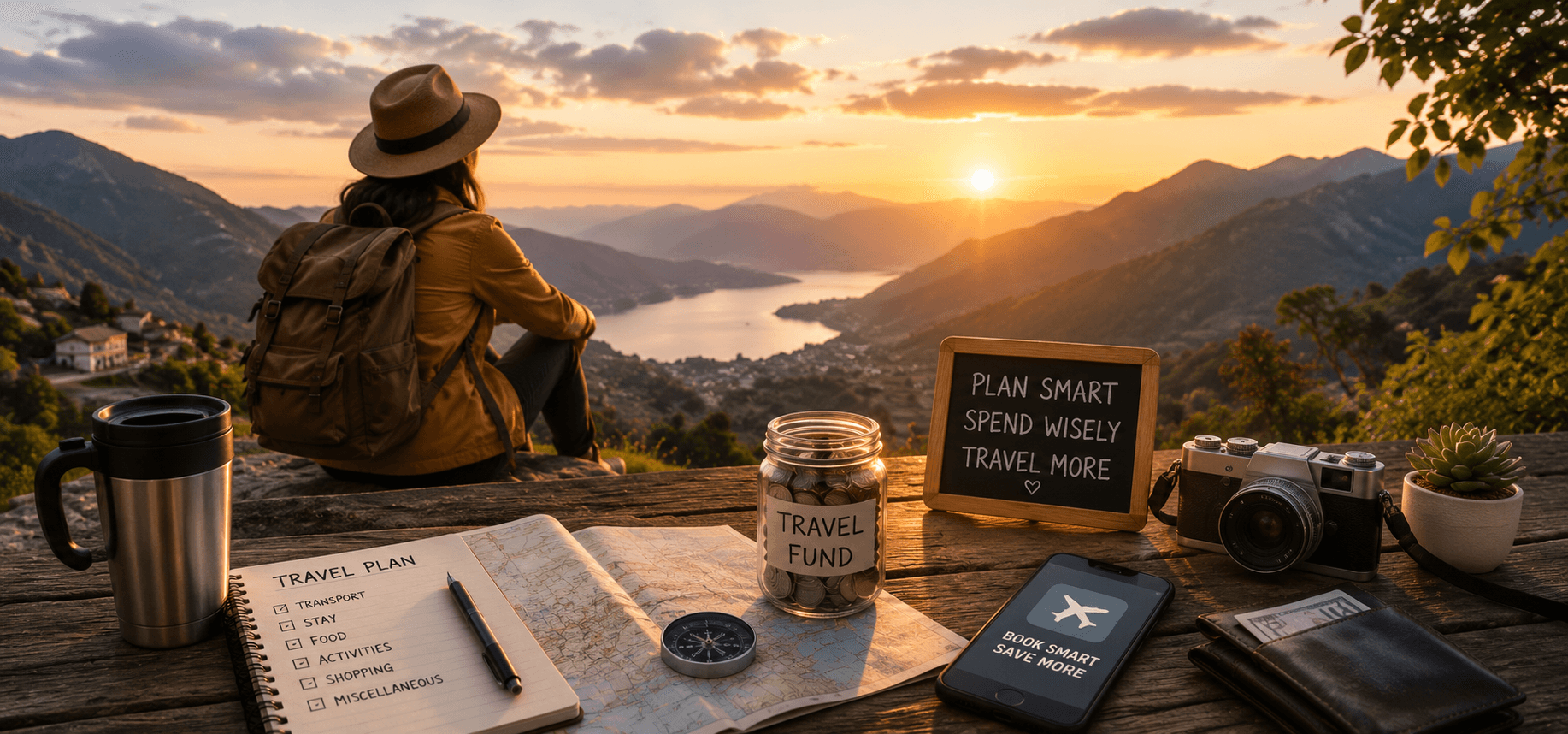
Excerpt: A simple, step-by-step guide to planning budget friendly trips. Learn how to save money on transport, stays, food, and sightseeing while keeping your trip safe and enjoyable.
Boarding: Smart PlanningSeat: Anywhere You ChooseGate: Open All Year
Introduction
Travel More Without Spending Too Much
Meera works in a small office and loves looking at travel photos during her lunch break. Every time she thinks about a trip, one thought stops her: "Travel is too costly. I will go when I earn more." Years pass, and the trip never happens.
One day, a friend invites her on a three-day trip. Meera almost says no. But the friend shows her a simple plan: a nearby destination, train tickets booked early, a clean guest house near the bus stand, and meals at local restaurants. The trip costs far less than Meera expected, and she enjoys every moment of it.
That trip teaches her something important. The problem was never money. The problem was planning. This guide explains how to travel on a budget the same way: with early planning, smart choices, and no shortcuts that put your safety at risk. These budget travel tips work for students, families, couples, solo travellers, and working professionals.
The Basics
What Is a Budget-Friendly Trip?
A budget-friendly trip is a trip where you decide your total spending limit first, and then plan everything to fit inside that limit. It does not mean missing out on fun or comfort. It means spending wisely on the things that matter and cutting costs on the things that do not.
In simple words, budget trip planning is about five smart choices: the right destination, the right transport, the right stay, the right food, and the right activities. When these five choices match your budget, your trip becomes affordable without feeling cheap.
Mindset
Budget Travel Does Not Mean Cheap Experience
Many people believe that low cost travel planning leads to a poor experience. This is not true. A good trip does not depend on a luxury hotel or business-class seats. It depends on good planning, good timing, safety, and real local experiences.
Think about what you actually remember from a trip: a beautiful sunrise, a tasty local meal, a walk through an old market, a conversation with a friendly local. None of these things are expensive. In fact, travellers who plan affordable trips often see more of a place, because they use local transport, eat local food, and spend time where local people spend time.
Budget travel becomes a poor experience only when people cut costs in the wrong places, such as safety, clean stays, or reliable transport. This guide will show you where to save and where not to save.
The Method
Step-by-Step Plan for a Budget-Friendly Trip
Step 1
Decide your total budget first. Fix the full amount you can spend before you pick a place. This one habit controls every other decision and stops overspending later.
Step 2
Choose places that match your budget. Do not pick a destination and then stretch your money. Pick the money limit first, then find destinations that fit inside it comfortably.
Step 3
Travel in the off-season or shoulder season if possible. Transport and stays usually cost less when fewer tourists visit. Check the weather first so the season is still safe and pleasant.
Step 4
Compare transport options. Check trains, buses, flights, and shared transport for the same route. The cheapest option changes with the route, the date, and how early you book.
Step 5
Book stays early after checking reviews and location. Early booking usually gives better choices at better rates. Always read recent reviews and check the distance from transport and main attractions.
Step 6
Plan the small costs too. Food, local transport, entry tickets, and emergency money are the costs most people forget. Write them into your budget before you leave home.
Destination
How to Choose a Budget-Friendly Destination
The destination decides most of your trip cost, so choose it carefully. Nearby destinations are usually the most affordable, because transport is the biggest expense for most trips. A place four to six hours away by train or bus can feel just as refreshing as a faraway place.
Less-crowded places are often kinder to your wallet than famous tourist hotspots. Stays, food, and local transport in popular tourist centres are usually priced for tourists. A smaller town near a famous place can offer a similar experience at a lower cost.
Also look for cities with good public transport. If you can move around by local bus, metro, or shared transport, you save money every single day. Finally, check that the place has clean, well-reviewed budget stays and simple local food options. If a place scores well on all these points, it is a strong choice for an affordable trip.
Transport
How to Save Money on Transport
Transport is usually the largest cost of any trip, so this is where smart planning saves the most money. Book trains early, because good seats at standard fares sell out first on popular routes. For shorter routes, government and reputed private buses are often the most economical choice.
If you are flying, book as early as you reasonably can and avoid peak dates such as festivals, long weekends, and school holidays, when fares rise sharply. Flying on weekdays or at less popular hours can also cost less. For hill areas and short local routes, shared taxis and shared jeeps are common and affordable, but use only known and trusted services.
Travel light. Extra luggage can mean extra fees on flights and makes it harder to use cheap local transport. Once you arrive, use local public transport such as buses and metro instead of private taxis for every small distance. Since fares and availability change often, always verify current prices and timings on official websites or apps before booking.
Stays
How to Save Money on Hotels and Stays
You do not need a luxury hotel for a great trip. You need a clean, safe place to sleep in a good location. Homestays and guest houses often give you more space and a local feel at a lower rate than hotels. Hostels are great for solo travellers and groups, and many now offer private rooms too. Budget hotels work well for families who want simple comfort.
Location matters as much as price. A very cheap room far from everything is not really cheap, because you will spend extra money and time on transport every day. A stay near public transport or near the places you want to visit usually saves more overall.
Before booking, read recent reviews carefully, especially comments about cleanliness, safety, and staff behaviour. Check what is included in the price and ask about extra charges such as taxes, parking, or early check-in fees, so there are no surprises at checkout. Room rates change with season and demand, so always verify the live price and final amount before you confirm any booking.
Food
How to Save Money on Food
Food is one of the easiest places to save money without losing enjoyment. In fact, the cheaper option is often the better one. Clean, busy local restaurants usually serve fresh, tasty food at fair prices, because they cook for local people every day, not just for tourists.
Try local meals instead of ordering familiar dishes everywhere. Local food is usually cheaper, fresher, and part of the real travel experience. Avoid restaurants right next to major tourist attractions, where prices are often higher for the same food. Walking a few streets away usually gives you better food at better prices.
Carry a refillable water bottle where safe drinking water is available, and keep light snacks such as dry fruits or biscuits with you. This stops small, repeated purchases that quietly eat into your budget. If your stay includes breakfast, use it well and plan your day around it.
Sightseeing
How to Plan Sightseeing on a Budget
Good sightseeing on a budget starts with a simple map exercise. Group nearby attractions together and cover them on the same day. This saves transport money and time. Random, unplanned movement across a city is one of the most common hidden costs in travel.
Use public transport between attractions wherever it is safe and practical. Include free attractions in your plan: public parks, beaches, old streets, viewpoints, markets, and many temples, churches, and public monuments cost nothing to enjoy.
For paid attractions, check entry ticket details on official websites before you go, because fees and timings change. Choose paid activities carefully. Ask yourself: will I truly remember this experience, or am I paying just because it is there? Skipping one or two overpriced activities often frees up money for something you will love much more.
Warnings
Common Budget Travel Mistakes to Avoid
Most budget trips fail not because of low money, but because of avoidable mistakes. The biggest one is booking late. Late bookings mean higher fares, fewer choices, and stress. The second is travelling in peak season without checking prices, when everything costs more and everything is crowded.
Another common mistake is choosing a very cheap hotel far from the city or attractions. The daily transport cost and lost time often cancel out the savings. Similarly, many travellers forget to count local transport, entry tickets, and food when planning, and then run short of money mid-trip.
Other mistakes include not reading recent reviews before booking, carrying too much luggage, and not keeping separate emergency money. Each of these seems small, but together they can turn an affordable trip into an expensive and tiring one. A little planning removes all of them.
Example
Sample Budget-Friendly Trip Plan
Here is a simple three-day structure you can adapt to almost any destination:
Day 1: Arrive by early transport, check in, rest briefly, and explore free or low-cost places near your stay, such as local markets, parks, or a nearby viewpoint. Eat dinner at a clean local restaurant.
Day 2: Cover the main attractions, grouped by area, using public or shared transport. Carry water and snacks. Keep one paid activity that truly matters to you, and enjoy free experiences around it.
Day 3: Visit one or two nearby places in the morning, spend a little time at the local market for small, meaningful souvenirs, and start your return journey with enough time buffer.
Important: The actual cost of this plan depends on your destination, season, transport choice, type of stay, and number of travellers. Always check live prices for transport, stays, and entry tickets before booking, because rates change frequently.
Before You Go
Budget Travel Checklist
Fix total budget before booking.
Compare transport options.
Check hotel location and reviews.
Keep emergency money separately.
Check weather before travel.
Carry required ID proof.
Plan local transport in advance.
Avoid unnecessary shopping.
Book important tickets early.
Keep digital and offline copies of bookings.
Stay Safe
Safety Tips for Budget Travellers
Saving money should never come at the cost of your safety. This is the golden rule of smart budget travel. Never book a stay only because it is the cheapest. If reviews mention safety problems, poor locks, or bad locations, choose a slightly costlier but safer option.
Avoid unknown late-night transport, especially in unfamiliar places. Plan your arrivals and departures during daytime hours when possible. Use only verified guides and registered transport services, even if an unofficial option looks cheaper. Avoid risky shortcuts such as unofficial routes, overloaded vehicles, or overcrowded boats and trails.
Keep your emergency money and a copy of your ID separate from your main wallet. Share your travel plan with a family member or friend. Keep local emergency numbers saved in your phone. A safe trip is always a successful trip, whatever the budget.
Final Word
Conclusion
Budget-friendly trips are not about luck or sacrifice. They are the result of a few smart habits: plan early, fix your budget first, choose the right destination, compare transport options, pick clean and well-located stays, eat local, and avoid the common mistakes that quietly drain money.
Most importantly, remember that memorable travel comes from experiences, not from expensive bookings. When you focus on experience instead of luxury, you can travel more often, see more places, and enjoy each trip fully, all within your budget. Start with one small nearby trip, apply these money saving travel tips, and build your confidence from there.
Remember
Prices, timings, and rules change often. Always verify live details on official websites or trusted apps before you book anything.
Questions
FAQs
1. How can I plan a budget-friendly trip?
Fix your total budget first, choose a destination that fits it, book transport and stays early, plan food and sightseeing in advance, and keep separate emergency money. Early planning is the biggest money saver.
2. What is the best way to save money while travelling?
Book early, travel in the off-season if the weather allows, use public transport, stay in well-reviewed budget stays, and eat at clean local restaurants instead of tourist-priced places.
3. Is budget travel safe?
Yes, if you plan wisely. Choose stays with good recent reviews, avoid unknown late-night transport, use verified services, and never cut costs on safety. Saving money and staying safe can go together.
4. How can families travel on a budget?
Families can pick nearby destinations, book family rooms or homestays early, travel by train or bus, carry snacks and water, and choose a mix of free and low-cost activities that children enjoy.
5. How can students plan low-cost trips?
Students can travel in groups to share stay and transport costs, choose hostels or guest houses, use student discounts where available, travel light, and pick destinations with good public transport.
6. Is off-season travel better for saving money?
Usually yes. Transport and stays often cost less in the off-season, and places are less crowded. Just check the weather and local conditions first, so the season is still safe and enjoyable.
7. How do I reduce hotel costs?
Book early, compare homestays, guest houses, hostels, and budget hotels, choose a location near public transport, read recent reviews, and confirm the final price including all charges before booking.
8. How do I save money on food during travel?
Eat at clean, busy local restaurants, try local meals, avoid restaurants right next to tourist attractions, carry a water bottle where safe water is available, and keep light snacks with you.
9. What should I avoid during a budget trip?
Avoid late bookings, peak-season travel without price checks, cheap but far-away hotels, unplanned daily expenses, too much luggage, unsafe shortcuts, and travelling without emergency money.
10. Does this article need live fact-checking?
Yes. Travel prices, hotel rates, transport availability, entry fees, and local rules change often, so live verification is required before publishing.
0 comments